
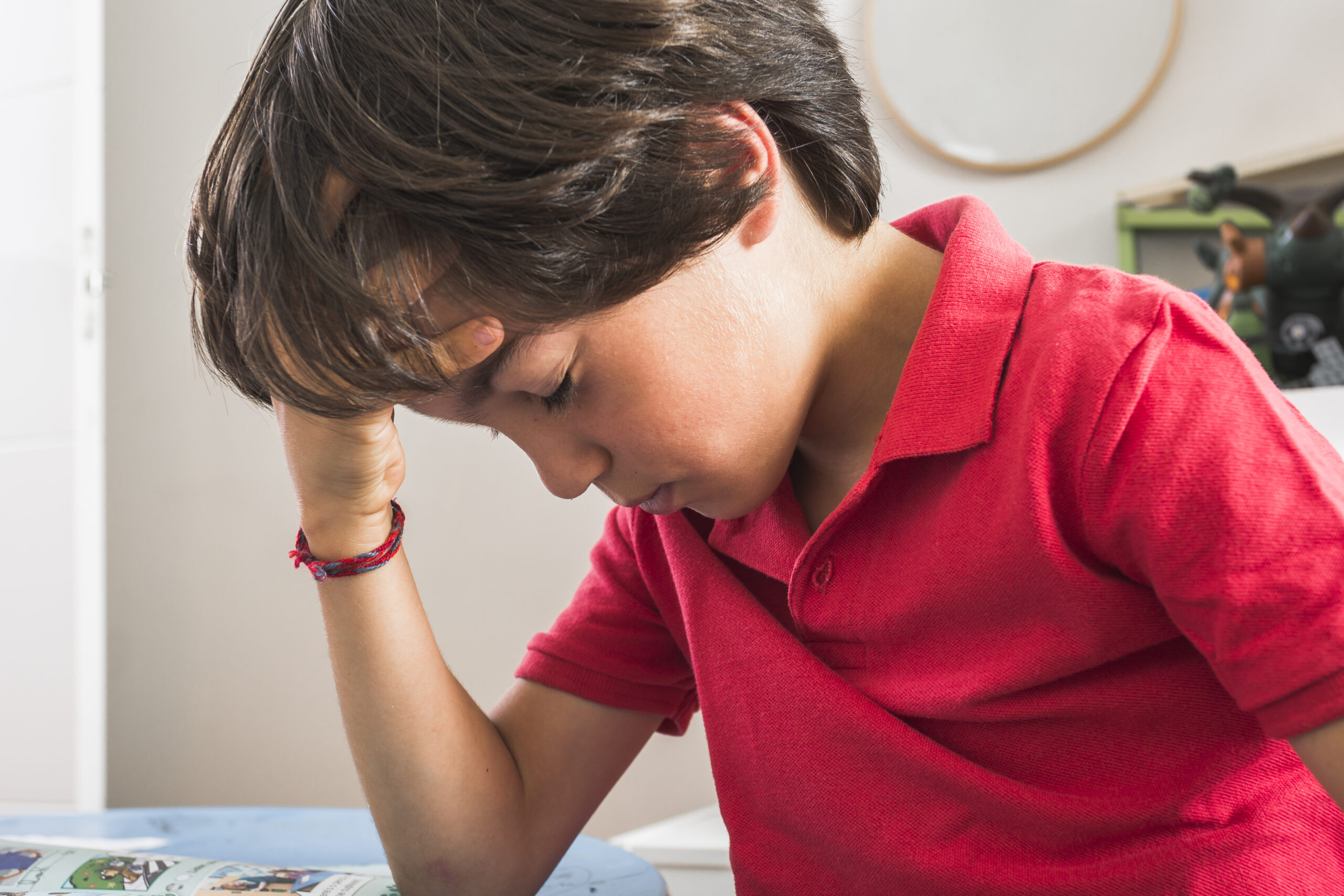
Anxiety in children can be surprisingly easy to miss. It does not always look the way you might expect. The child sitting quietly in their room, the one who has started complaining of stomach aches before school, or the one who has been quicker to anger lately, these are not always signs of a difficult child or a bad phase. They are often signs of a child who is struggling emotionally and does not yet have the tools to manage what they are feeling.
For parents in Chelsea and Weybridge Surrey, understanding what child anxiety symptoms actually look like, and knowing when therapy can help, is one of the most valuable things you can give your child.
What Anxiety in Children Really Is?
Anxiety is a natural human response. Every child feels it sometimes, before a test, when starting a new school, or when something unfamiliar happens. That is completely normal and even healthy. It shows the brain is working as it should.
The difficulty arises when anxiety becomes persistent, intense, or disproportionate. When a child’s worry starts to shape their choices, limits what they do, affects how they sleep, or regularly shows up in their body, that is when it has moved beyond ordinary nervousness and into something that deserves proper support.
Research suggests that anxiety disorders affect somewhere between 15 and 20 percent of children and adolescents. In high-expectation environments like those across Chelsea and the wider Surrey commuter belt, the academic, social, and digital pressures on young people can make that number feel very real.
Child Anxiety Symptoms to Look Out For
Anxiety in children presents differently depending on age, personality, and circumstance. One of the most important things to understand is that anxiety does not always look like worry. Some of the most anxious children appear angry, hyperactive, or withdrawn rather than visibly fearful.
Emotional signs
Excessive worry that seems out of proportion to the situation. Catastrophic thinking, always imagining the worst will happen. A persistent sense of being on edge or irritable. Low self-confidence, fear of getting things wrong, or being overly self-critical.
Physical signs
This is where many parents first notice something is off. Recurring stomach aches or nausea before school or social events. Headaches that come and go without a clear cause. Difficulty falling asleep, nightmares, or waking in the night and being unable to settle again. Complaints of a racing heart or feeling shaky. These physical symptoms are real, not invented, and they reflect how anxiety lives in the body as much as the mind.
Behavioural signs
Avoiding school, parties, social situations, or anything new. Clinging to parents or finding it very difficult to separate. Emotional outbursts that seem disproportionate to the trigger. Withdrawing from friends or hobbies they used to enjoy. Using screens excessively as a way to escape. A noticeable drop in school engagement or performance.
The signs that are easier to miss
Some children hold their anxiety together in public and fall apart at home, where they finally feel safe enough to let it out. Others act out through anger or defiance when underneath they are frightened. If your child seems different from how they used to be, that intuition as a parent is worth listening to.
What Causes Anxiety in Children and Young People
There is rarely a single cause. Anxiety in children usually develops from a combination of factors that have built up over time.
Some children are simply more sensitive by nature, and there is often a family pattern of anxiety that runs across generations. This is not a flaw in your child or your family. It simply means they may need a little more support in learning to regulate their emotional responses.
Significant life events can also trigger anxiety. Family separation, bereavement, moving home or school, academic pressure, or experiences of bullying are among the most common triggers that parents in London and Surrey describe. For some children, exposure to distressing events can leave the nervous system in a state of ongoing alertness, even long after the event itself has passed.
Social and digital pressures are increasingly significant for older children and teenagers. The intense social landscape of secondary school life in London, combined with the constant comparison and judgement of social media, creates real anxiety for many young people who appear to be coping just fine on the surface.
How Anxiety Affects a Child’s Life If It Goes Unsupported
When childhood anxiety is not addressed, the effects can build over time. A child who avoids school to manage their anxiety today may fall behind academically and socially over the coming months. A teenager who withdraws from friendships to protect themselves from social anxiety may find those patterns much harder to shift in adulthood.
Families in Chelsea and Weybridge often describe noticing a child who was once enthusiastic and sociable gradually becoming reluctant, fearful, or closed off. That shift is not a personality change. It is usually anxiety at work, and it responds well to early, thoughtful support.
How Therapy Helps Children with Anxiety in London and Surrey
At Aimee Griffin Therapy, children and young people experiencing anxiety are supported across two accessible locations, Chelsea in London and Weybridge in Surrey.
For younger children, therapy does not rely on talking. Play, movement, and creative approaches give children a natural way to express and process emotions that they do not yet have words for. Many parents are surprised by how effective this is, even for children who seem very closed off at home.
For teenagers, sessions offer something genuinely different from what a parent or teacher can provide. A confidential, non-judgemental space where they can explore what is happening for them, honestly and without consequence. For young people carrying anxiety about identity, peer relationships, academic performance, or their sense of self, this kind of space can be genuinely transformative.
Where helpful, parents are involved in the process too. Understanding how your child’s anxiety works, and how to respond to it at home, is an important part of the picture.
If you are also wondering whether what you are seeing in your child could be something other than anxiety, it may help to read this alongside our guide on when to consider therapy more broadly: How To Know If My Child Needs A Therapist in London.
When to Seek Support for Child Anxiety in Chelsea or Weybridge
You do not need to wait until things reach a crisis point. Consider reaching out if anxiety symptoms have been present for four weeks or more, if your child is avoiding school or activities they previously enjoyed, if physical symptoms have no clear medical explanation, or if the anxiety is causing distress for your child or the family as a whole.
You also do not need a GP referral to access private therapy. You can contact Aimee Griffin Therapy directly, and a first conversation can help you understand what the right next step looks like for your child.
Frequently Asked Questions-
Is it normal for children to feel anxious?
Yes, some level of anxiety is entirely normal in childhood. It becomes a concern when it is persistent, intense, or preventing your child from living their life fully.
What is the most common form of anxiety in children?
Separation anxiety, generalised anxiety, and social anxiety are among the most frequently seen in children and adolescents. Each presents differently and is approached in a tailored way within therapy.
Can therapy really help a child with anxiety?
Yes, and there is a strong body of evidence to support this. Children often respond very well to therapeutic support because their patterns of thinking and behaviour are still forming and are genuinely open to change.
My child refuses to talk about their feelings. Can therapy still work?
Absolutely. Particularly for younger children, therapy does not depend on conversation. Play-based and creative approaches allow children to process what they are experiencing without needing to articulate it directly.
How do I explain therapy to my child without worrying them?
Keep it simple and warm. You might say something like, this is a place where you can play, draw, or chat with someone whose job is to help children feel better about difficult feelings. Framing it as normal and caring, rather than as a response to something being wrong, makes a real difference to how children receive it.
Do you offer therapy for child anxiety in Chelsea and Weybridge?
Yes. Aimee Griffin Therapy provides specialist support for children and adolescents experiencing anxiety from two locations, Chelsea, London SW1W 9BJ and Weybridge, Surrey KT13.